Ridgeline Operations Platform — a leads and job pipeline for a contracting business
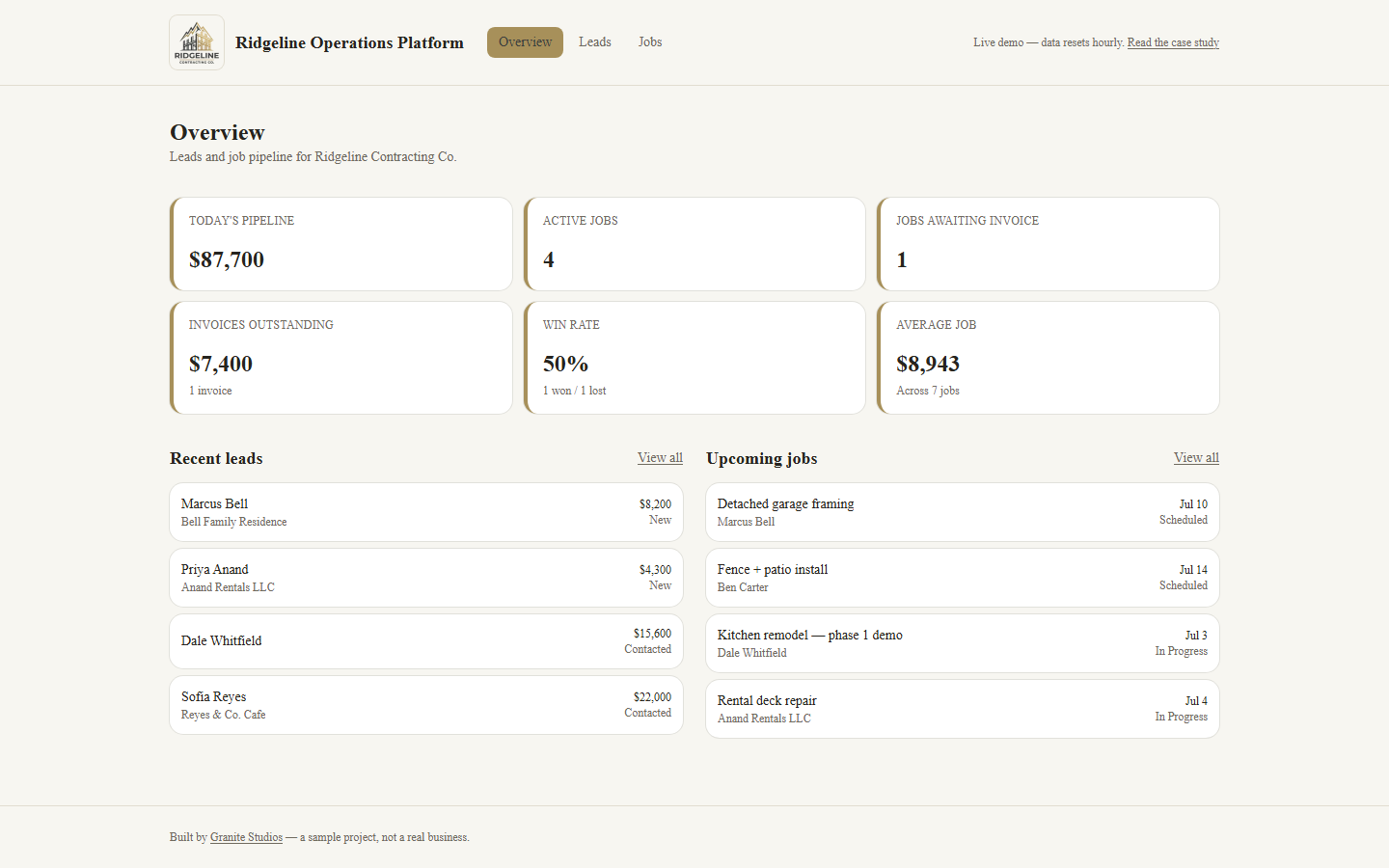
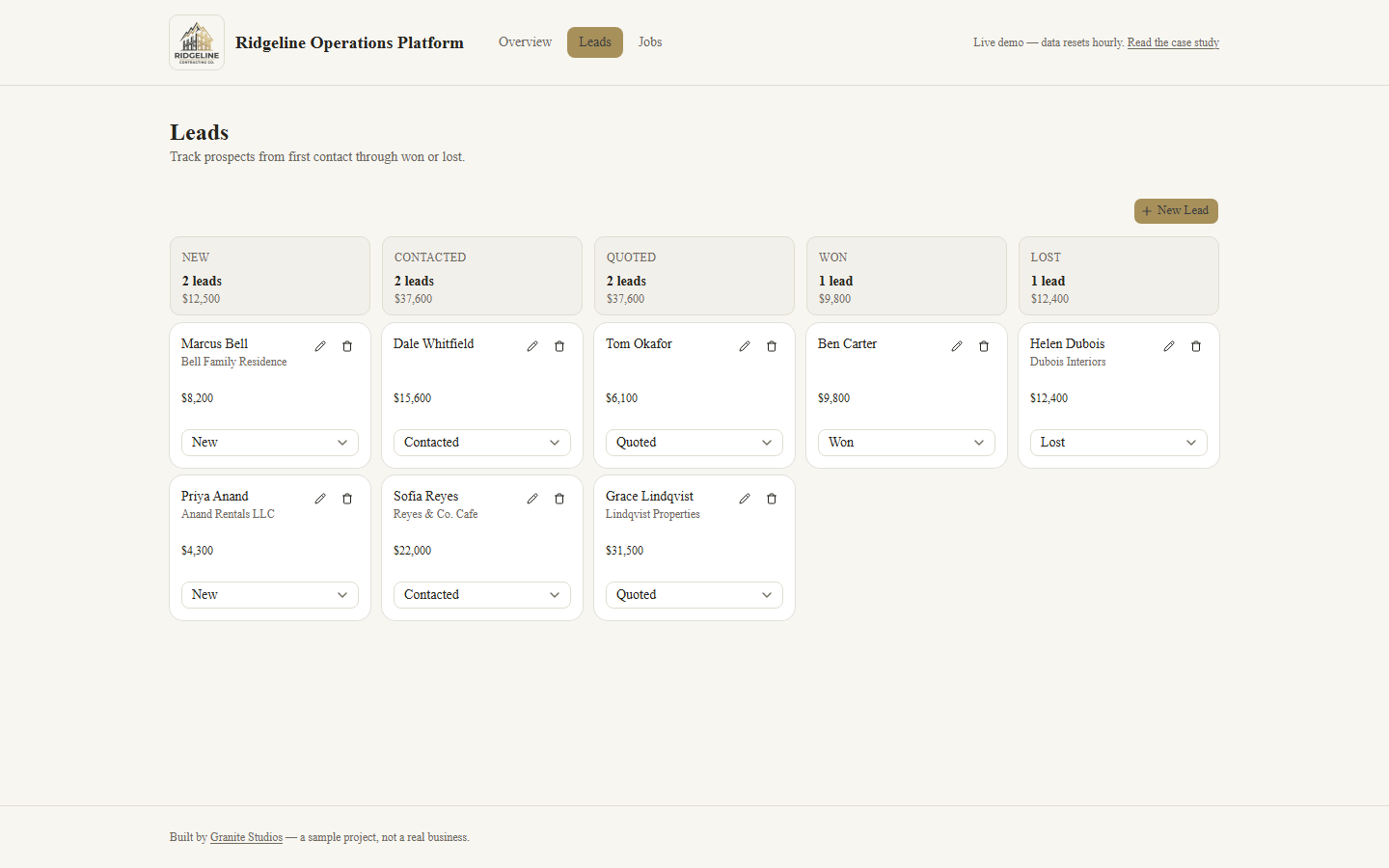
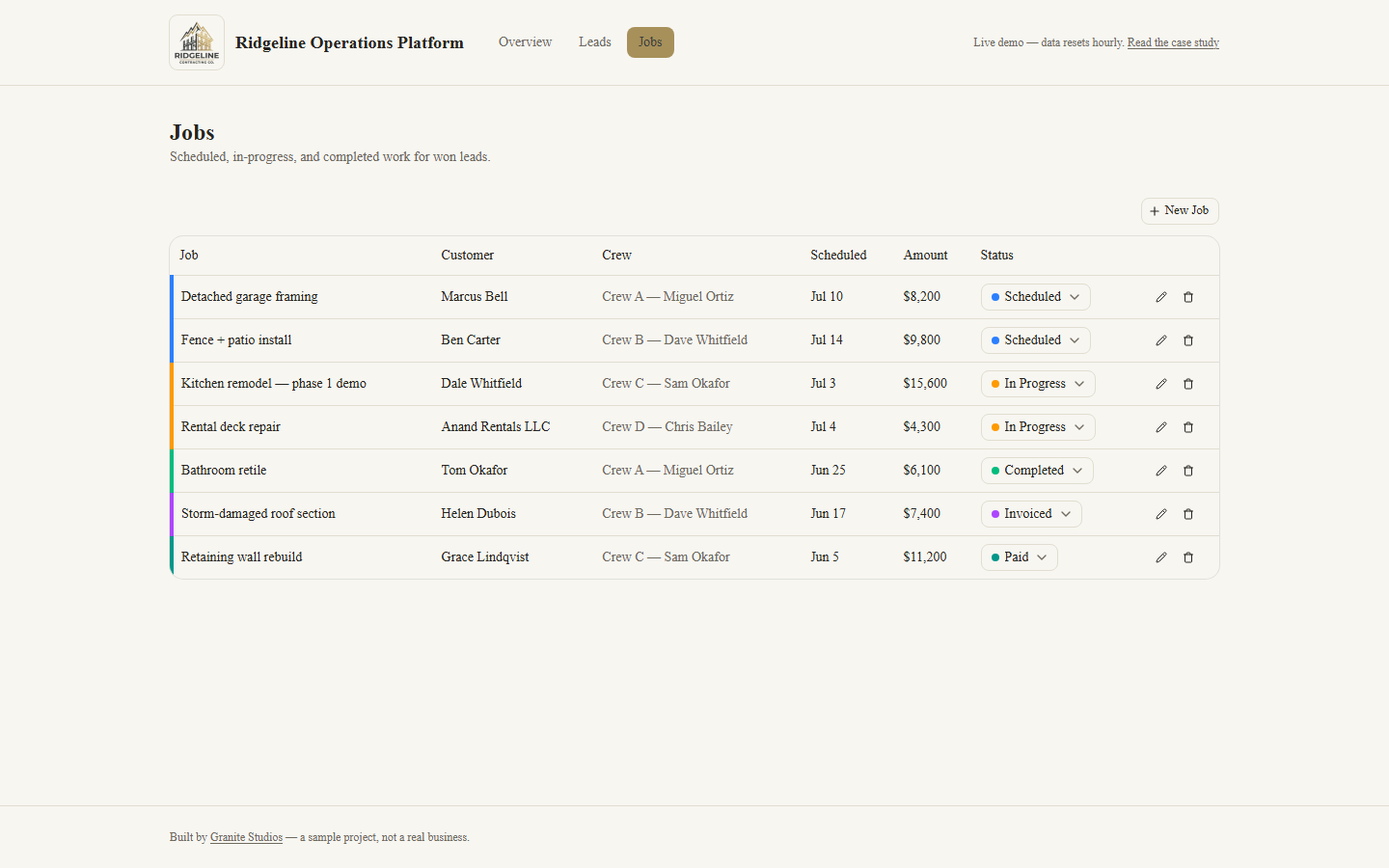
Everything a field business needs to run leads and jobs
Deliberately simple, on purpose
No servers to manage, no auth system to build for a demo that doesn't need one — just a serverless frontend talking directly to a secured database.
Information lived in spreadsheets, texts, and memory
Ridgeline relied on spreadsheets, text messages, and memory to keep jobs moving. Quotes were won but never scheduled. Team members weren't sure which jobs had been invoiced. Owners spent their time chasing information instead of running projects.
One pipeline, two connected views
A single Next.js dashboard with a Supabase-backed database: a kanban-style leads pipeline (new → contacted → quoted → won/lost) and a jobs table (scheduled → in progress → completed → invoiced → paid), linked so a won lead carries its history into the job record.
Every customer, one system, start to finish
Contractors can now track every customer from first phone call to final payment in a single system — no more asking around to find out what's been quoted, scheduled, or invoiced.
This isn't a prototype
You're using the same application showcased above. Add leads, move jobs through the pipeline, edit records, and explore the workflow. Demo data resets hourly so every visitor starts with a clean environment.
This is a foundation, not the ceiling
What's live today covers the core leads-to-payment workflow. Real engagements grow from here — the same foundation extends with integrations and features scoped to how a specific business actually operates.
We build systems like this for real businesses.
If leads, jobs, or customers are living in spreadsheets and group chats, this is exactly the kind of thing we replace it with.